
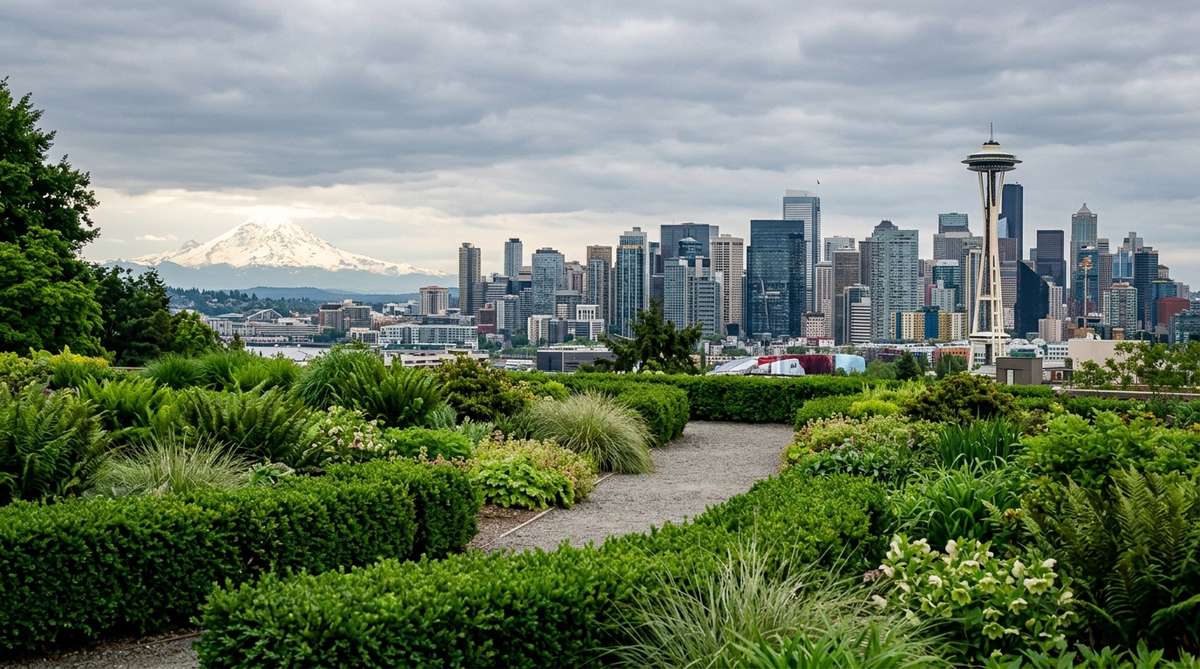
- Seattle landscaping rates run $50-$150/hour vs. $35-$75/hour nationally, making the metro one of the highest-margin landscaping markets in the U.S. (Manta/Homeyou, 2025)
- Seattle owner-households earn a median $151,430 (more than 2x renter households), creating a premium customer base for landscaping services (Data USA/Seattle OPCD)
- 76% of “near me” searchers visit a related business within a day, with 1.5 billion monthly mobile local searches happening on Google (BrightLocal/On The Map, 2025)
- Direct mail delivers 161% ROI on house lists, the highest of any paid channel for local service businesses (LettrLabs, 2025)
- Average landscaping LTV runs $2,800-$3,000 per customer; maintain CAC at 20-30% of LTV for sustainable growth (Landscape Marketing Pros)
Seattle is one of the most lucrative landscaping markets in the United States. King County’s median home sale price is roughly $999,500 (Norada Real Estate, 2025), and Seattle landscaping rates of $50-$150/hour run double or triple the national average of $35-$75/hour (Manta, 2025). The challenge is not demand. It is standing out among the competition.
This guide covers the 17 marketing tactics that actually work for Seattle landscaping companies, backed by current data and tailored to the unique rhythms of the Pacific Northwest market.
Why Is Seattle Such a Strong Market for Landscaping Services?
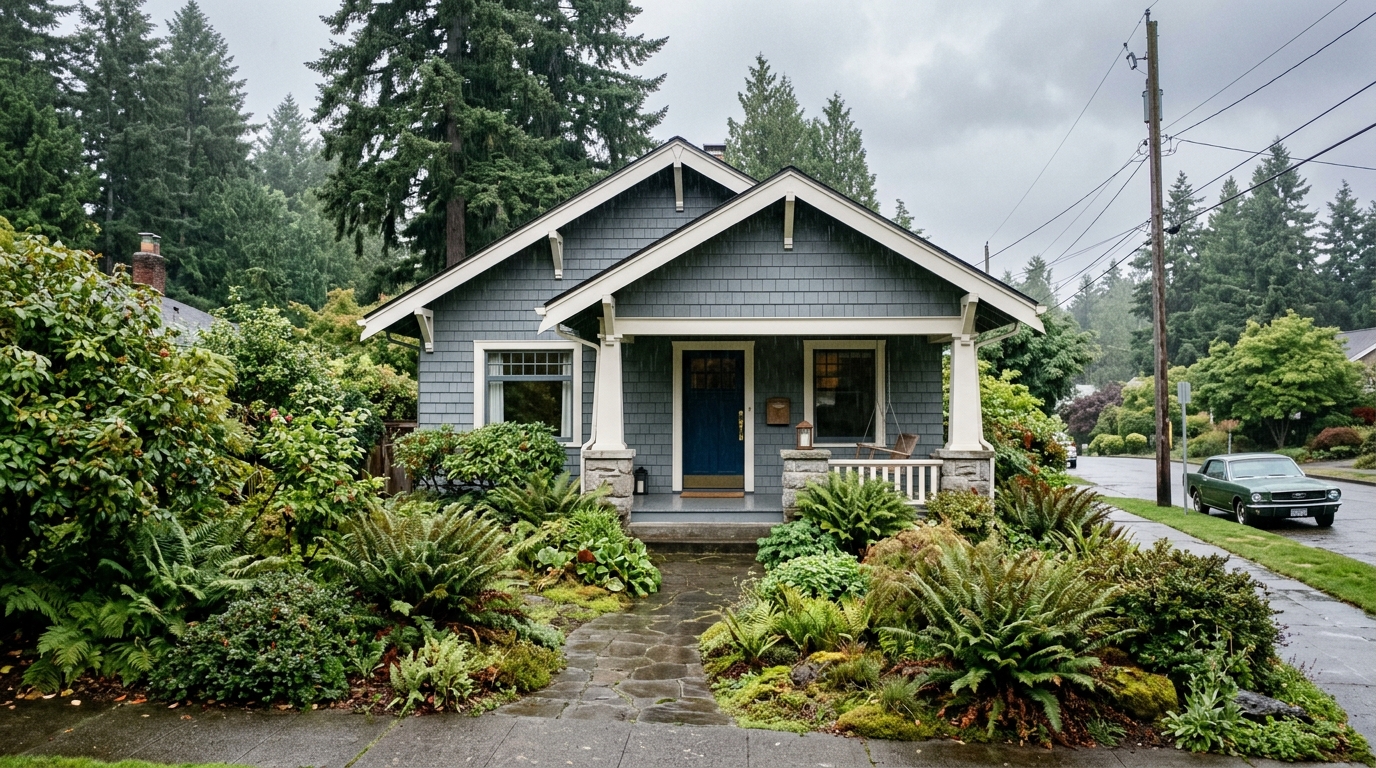
Seattle home values, demographics, and climate combine to create exceptional landscaping demand. Zillow (Feb 2026) reports the average Seattle home value at $847,975, with the metro median at $733,309. Seattle owner-households earn a median income of $151,430, more than twice the income of renter households at $74,580 (Data USA).
The U.S. household lawn-and-garden spend hit $616 in 2024, up nearly 20% since 2020 (Aspire/Jobber, 2025). In Seattle, that number runs higher because of property values and the Pacific Northwest’s strong gardening culture. Hardscaping services specifically generate 25-40% of revenue with 25-40% margins, double or triple the margins on routine maintenance work (Jobber, 2025).
The flip side: Seattle’s 43.7% homeownership rate is well below the national average of 65.2% (Data USA), so your target market is concentrated in specific neighborhoods. Smart marketing means knowing which Seattle zip codes match your ideal customer profile.
How Does Seattle’s Climate Shape Landscaping Demand?
Seattle’s climate creates dual demand. The rainy season runs October through April (about 6 months), with annual precipitation averaging 39.3 inches (Climate of Seattle, Wikipedia). Seattle sits in USDA hardiness zone 9a (with pockets in 8b), supporting an enormous range of plants (Emagazine, 2025).
That long wet season drives demand for drainage systems, French drains, permeable hardscapes, and waterproof outdoor structures. Meanwhile, increasingly hot, dry summers are creating a new market for drought-tolerant landscaping. The Seattle Times (2025) reports that drought-tolerant landscaping is “not just a trend, but a necessity” in the region.
Smart irrigation systems using sensors and weather data can reduce water usage by up to 30% in PNW commercial properties (Avid Landscape, 2026). Native plant demand is surging, with key Seattle natives including sword ferns, evergreen huckleberry, salal, Oregon grape, and California lilac (ceanothus). Marketing that highlights expertise in both rain management and drought tolerance positions your company perfectly for current Seattle homeowner concerns.
How Should You Build a Brand That Resonates With Seattle Homeowners?
Seattle homeowners are environmentally conscious, design-aware, and willing to pay for craftsmanship. Generic landscaping branding gets ignored. Your brand needs to signal three things: local roots, environmental responsibility, and quality work.
Start with visual identity. Colors that echo the Pacific Northwest (deep greens, slate grays, muted blues) and imagery that features native plants and authentic Seattle settings create immediate recognition. Your website, truck wraps, uniforms, and project signs should all share consistent design elements.
Communicate values explicitly. Feature stories about sustainable projects, native plant installations, and water conservation work on your website. Share when your team volunteers at urban green spaces or donates plants to community gardens. Seattle clients want to know you share their values, and a brand built on environmental stewardship turns customers into advocates.
What Website Features Convert Seattle Homeowners Into Leads?
Your website is your first impression. According to Leads4Build (2025), the average landscaping company converts only 1-3% of website visitors into leads, while high-converting landing pages see 5-15%+ conversion rates. The difference comes from getting these elements right:
- High-impact visuals. Before-and-after galleries from real Seattle projects, with locations identified (“Capitol Hill,” “Queen Anne,” “Ballard”)
- Mobile optimization. 84% of local searches happen on mobile (Marketing LTB, 2025). Your site must load fast and be easy to navigate on a phone
- Visible phone number and contact form. Tap-to-call functionality on every page
- Online scheduling. 94% of customers are more likely to book if online scheduling is available (Leads4Build, 2025)
- Authentic testimonials. Real client stories, not generic quotes
- Service area pages. Dedicated pages for each Seattle neighborhood you serve
Target keywords Seattle homeowners actually search: “native plant design Capitol Hill,” “rainwise landscaping Queen Anne,” “drought tolerant landscaping Ballard.” These location-specific phrases drive far more qualified traffic than generic “Seattle landscaping” terms.
How Do You Strengthen Local SEO for a Seattle Landscaping Company?
Local SEO is dramatically underexploited. According to BrightLocal (2025), 58% of businesses are not optimizing for local search and only 30% have a formal local SEO plan. That means investment in this area gives you an immediate competitive edge.
The numbers behind local search are staggering: 1.5 billion monthly “near me” searches happen on Google, with 50 million per day. 46% of all Google searches have local intent, and 76% of “near me” searchers visit a related business within a day (On The Map, 2025).
Master your Google Business Profile first. Complete every field, upload real project photos weekly, post updates monthly, and respond to every review within 48 hours. Use the posts feature to share seasonal updates: spring cleanup deals, summer drought-tolerant plant suggestions, fall leaf removal services, winter consultation availability.
For deeper local visibility, work with a specialized SEO partner who understands the Seattle market.
Which Social Media Platforms Work Best for Seattle Landscapers?
Social media engagement varies dramatically by platform. According to Sprout Social (2026) and Socialinsider (2026):
- TikTok engagement rate: 3.70% (grew 49% YoY in 2025), highest across platforms
- Instagram engagement: 0.48%, with 3 billion monthly active users globally
- Facebook engagement: 0.15%, but 3.07 billion MAU and strongest for community groups
For Seattle landscaping companies, focus on Instagram for project showcases and Facebook for community engagement and seasonal reminders. 90% of Instagram users follow at least one business, and 71% of U.S. businesses use the platform (Sprout Social, 2026). Reels made up over 50% of all ads shared on Instagram in 2025, and short-form video delivers the highest ROI among video formats at 41%.
Tag posts with Seattle neighborhoods and local events. When residents recognize their block in your before-and-after photos, engagement spikes. Show the unpolished side: muddy boots, rain gear, real crews working through actual Pacific Northwest weather. Authentic content outperforms staged photos every time.
How Effective Is Email Marketing for Landscaping Companies?
Email remains one of the most cost-effective channels for landscaping companies. According to MailerLite (2025), the average email open rate in 2025 is 43.46% across industries, with click rates of 2.09% and click-to-open rates of 6.81%.
For service businesses, target benchmarks of 45%+ open rates and 4%+ click rates. Send no more than once or twice per month. Each email should provide genuine value: winter plant care advice, pollinator-friendly design tips, upcoming spring service availability, or photos of recent neighborhood projects.
Build your list through your website, social channels, and project handoffs. Offer something concrete: a seasonal Seattle planting calendar, a guide to native plants for shade, or early-bird booking discounts. Use friendly subject lines and personalize greetings when possible.
How Do Reviews Drive Seattle Landscaping Lead Generation?
Reviews are the most underrated marketing channel for Seattle landscapers. According to BrightLocal’s 2025 survey, 97% of consumers read reviews before choosing a local business, and 31% will only hire a company rated 4.5 stars or higher.
Make review collection systematic. Send a follow-up text or email within 24 hours of project completion with a direct link to your Google Business Profile review page. Turning client voices into growth is the highest-leverage habit you can build.
Showcase reviews actively. Highlight standout testimonials on your homepage, sprinkle them through service pages, and pin them to your Google Business Profile. Respond to every review (positive or negative) within 48 hours. Seattle homeowners notice the level of engagement and choose accordingly.
Why Should You Build Partnerships With Other Seattle Businesses?
Strategic partnerships generate steady referrals at near-zero acquisition cost. Identify other service providers serving the same homeowners: real estate agents, builders, general contractors, garden centers, architects, and interior designers.
Real estate agents are particularly valuable in Seattle’s premium market. Homes with strong curb appeal and finished landscaping sell faster and for higher prices. Agents need landscapers who can deliver quick turnarounds before listings go live. Build that relationship and you have a recurring lead source tied to one of Seattle’s most active industries.
Offer value first. A referral bonus, co-hosted client event, or collaborative blog post on “preparing your yard to sell” gives partners something concrete to share. Authenticity matters more than complexity. Reliable communication and consistent quality keep partnerships productive for years.
How Does Community Involvement Drive Seattle Landscaping Business?
Seattle’s community-oriented culture rewards businesses that show up consistently. Participate in farmers markets, sponsor neighborhood cleanups, support local environmental nonprofits, host workshops on pollinator-friendly planting, or donate time to public garden maintenance.
The marketing benefit comes from repeated visibility and authentic relationships. When residents see your team participating in community events month after month, they associate your company with reliability and care. This translates to word-of-mouth referrals that no paid campaign can replicate.
Pick activities that align with your company values and target neighborhoods. A Capitol Hill pollinator workshop reaches different homeowners than a Bellevue garden tour. Match your community presence to where your ideal customers actually live.
How Do You Use Seasonal Promotions in Seattle’s Climate?
Seattle’s distinct seasons create natural promotion opportunities. Smart timing aligns marketing with what homeowners actually need each month:
- February-April: Spring cleanup packages, pruning, mulching, garden bed prep
- May-June: Drought-tolerant plant installations, irrigation setup, hardscape projects
- July-August: Outdoor living installations, summer pruning, drought management
- September-October: Fall planting (best time in PNW), leaf removal contracts, winter prep
- November-January: Winter consultations for spring projects, drainage solutions, holiday lighting
Promote each service 4-6 weeks before peak demand so homeowners book ahead. This keeps your schedule full and demonstrates you understand Seattle’s growing rhythm. Generic year-round promotions get tuned out. Timely offers tied to current weather and plant cycles get attention.
Does Direct Mail Still Work for Seattle Landscaping Companies?
Direct mail remains one of the highest-ROI channels for local service businesses, especially in Seattle’s premium neighborhoods. According to LettrLabs (2025), direct mail delivers $42 ROI for every $1 spent (ANA/DMA 2025), and house-list direct mail produces 161% average ROI, the highest of any paid channel.
The numbers continue: average response rate is 4.4% overall, climbing to 9% for house lists, which is 37 times higher than email. 84% of marketers agree direct mail provides the highest ROI of any channel, up from 74% in 2023 and 67% in 2022 (LettrLabs, 2025).
For Seattle, target high-value neighborhoods with carrier-route mailings. Use quality photos of actual local projects, lead with a specific value statement, and include an easy next step (discount code, free consultation, QR code to your site). Track responses with a unique phone number or campaign URL to measure real ROI.
When Should Seattle Landscapers Use Digital Advertising?
Targeted digital ads work well when SEO is still building or when you need to fill a specific calendar gap. Average Google Ads cost-per-lead climbed to $70.11 in 2025, up 5.13% (WordStream). For Seattle landscapers, three platforms produce results:
- Google Local Services Ads. Pay-per-lead model that puts you at the very top of local searches with the “Google Guaranteed” badge
- Google Search Ads. Target high-intent keywords like “Seattle patio installer” or “native plant landscaping Capitol Hill”
- Facebook and Instagram retargeting. Re-engage homeowners who visited your website but did not convert
Even modest ad budgets produce results when targeting is specific and copy speaks to Seattle values (sustainability, native plants, craftsmanship). Work with a PPC specialist if you want professional management of your ad spend.
How Do You Build a Referral Program That Generates Steady Leads?
Referral programs are one of the highest-converting lead sources for landscaping companies. Home services average industry conversion rate is 7.8% with a 30-90 day sales cycle (WebFX, 2026), but referred leads convert at significantly higher rates because they arrive pre-qualified by trust.
Structure your program for simplicity. Offer a clear, valuable incentive: $50-$150 service credit, a $100 gift card to a local nursery, or a charitable donation in the client’s name. Mention the program on your website, invoices, project completion emails, and Google Business Profile.
Follow up quickly when a referral comes in. Personally thank the referring client, then reach out to the prospect within 24 hours. Keep the process feeling warm and genuine, not transactional. Seattle homeowners refer their landscaper because they trust them, and the program should honor that trust.
How Do You Track Whether Your Marketing Is Working?
Healthy benchmark for any marketing program: maintain a 3:1 or 4:1 LTV to CAC ratio (First Page Sage, 2025). For landscaping companies specifically, CAC should run 20-30% of LTV (Landscape Marketing Pros).
Average landscaping LTV is roughly $2,800-$3,000 per customer (Back of Napkin Lawn Care). For Seattle’s premium market, that number runs higher because of larger project sizes. Use Google Analytics, call tracking, and a simple lead-source tracking spreadsheet to identify which channels deliver the lowest CAC and highest LTV customers.
Quarterly, review what is working and double down on it. Cut or restructure tactics that are not producing leads at acceptable cost. Tracking and analytics turn marketing from guesswork into a measurable system.
Which of These 17 Tactics Should Seattle Landscapers Start With?
You cannot do everything at once. Pick the highest-leverage actions for where your business is today:
- If your Google Business Profile is incomplete: Fix that this week. It is free and contributes 19.2% of local rankings
- If you have fewer than 20 Google reviews: Build a review request system into every project closeout
- If your website lacks neighborhood-specific service pages: Create one for your highest-value Seattle area first
- If you are not tracking lead sources: Set up Google Analytics and ask every new lead how they found you
- If you want a complete plan tailored to Seattle: Request a consultation with our landscape marketing team
The Seattle landscaping market rewards companies that combine local expertise, environmental awareness, and consistent execution. Get the foundations right, then layer in the specialized tactics that match your specific goals and market position.
How much do Seattle landscaping companies charge compared to the national average?
Seattle landscaping rates run $50 to $150 per hour, compared to the U.S. national average of $35 to $75 per hour according to Manta (2025). Seattle landscape designer costs in King County range $1,597 to $13,523. The premium reflects higher home values (median Seattle home value is $847,975 per Zillow), strong demand from owner-households earning median income of $151,430, and the year-round growing season in USDA zone 9a.
What is the most effective marketing channel for Seattle landscapers?
For most Seattle landscapers, the highest-ROI channels are Google Business Profile optimization (19.2% of local ranking factors), local SEO (1.5 billion monthly “near-me” searches), and direct mail to high-value neighborhoods (161% ROI on house-list mailings according to LettrLabs, 2025). Email marketing also performs well for service businesses with average open rates of 43.46% (MailerLite, 2025). The best mix depends on your business stage, target neighborhoods, and current customer acquisition cost.
Which native plants should Seattle landscapers feature in their marketing?
Key Pacific Northwest natives in demand include sword ferns, evergreen huckleberry, salal, Oregon grape, California lilac (ceanothus), and yarrow. The Seattle Times (2025) reports that drought-tolerant landscaping is now a necessity given hotter, drier summers in Puget Sound. Marketing that highlights expertise in both rain management (drainage, permeable hardscapes) and drought tolerance (native plants, smart irrigation) positions your company perfectly for current Seattle homeowner concerns.
What customer acquisition cost should a Seattle landscaping company target?
Maintain a 3:1 or 4:1 LTV to CAC ratio per First Page Sage (2025). For landscaping companies, target CAC at 20 to 30 percent of customer lifetime value (Landscape Marketing Pros). With average landscaping LTV running $2,800 to $3,000 per customer nationally and higher in Seattle’s premium market, a healthy CAC range is $560 to $900. Track lead source attribution rigorously to identify which channels produce customers within that range.

Which social media platform works best for Seattle landscaping companies?
Instagram works best for project showcases (3 billion monthly users, 0.48% engagement rate per Sprout Social 2026). Reels made up over 50% of all ads shared on Instagram in 2025 and short-form video delivers 41% ROI. TikTok has the highest overall engagement at 3.70% and grew 49% in 2025. Facebook (3.07 billion MAU, 0.15% engagement) is best for community groups and seasonal updates. Tag posts with Seattle neighborhoods and local events to maximize relevance.