
A strong landscaping talent strategy is now the single biggest growth lever in the green industry. NALP reports that roughly 70% of landscaping companies struggle to fill open positions, BLS projects 4% job growth through 2034, and SHRM pegs average cost-per-hire at $4,700. Winners recruit, train, and retain with intent.
Key Takeaways
- Around 70% of NALP member companies report difficulty filling positions, and 76% have at least one open role (NALP, Lawn & Landscape 2024 Labor Market Report).
- BLS reports a May 2024 median wage of $15.71 per hour ($33,380 annually) for landscaping and groundskeeping workers, with 4% job growth projected through 2034.
- Average cost-per-hire sits near $4,700 to $5,475, and replacing an employee can cost 1.5x to 2x annual salary (SHRM 2025 benchmarks).
- Companies with strong employer brands see up to 50% lower cost-per-hire and 28% lower turnover (LinkedIn Talent Solutions).
- DHS and DOL added 64,716 supplemental H-2B visas for FY 2026 on top of the 66,000 statutory cap, and USCIS hit the second-half cap on March 10, 2026.
Why Is Talent the #1 Growth Constraint for Landscaping Companies?
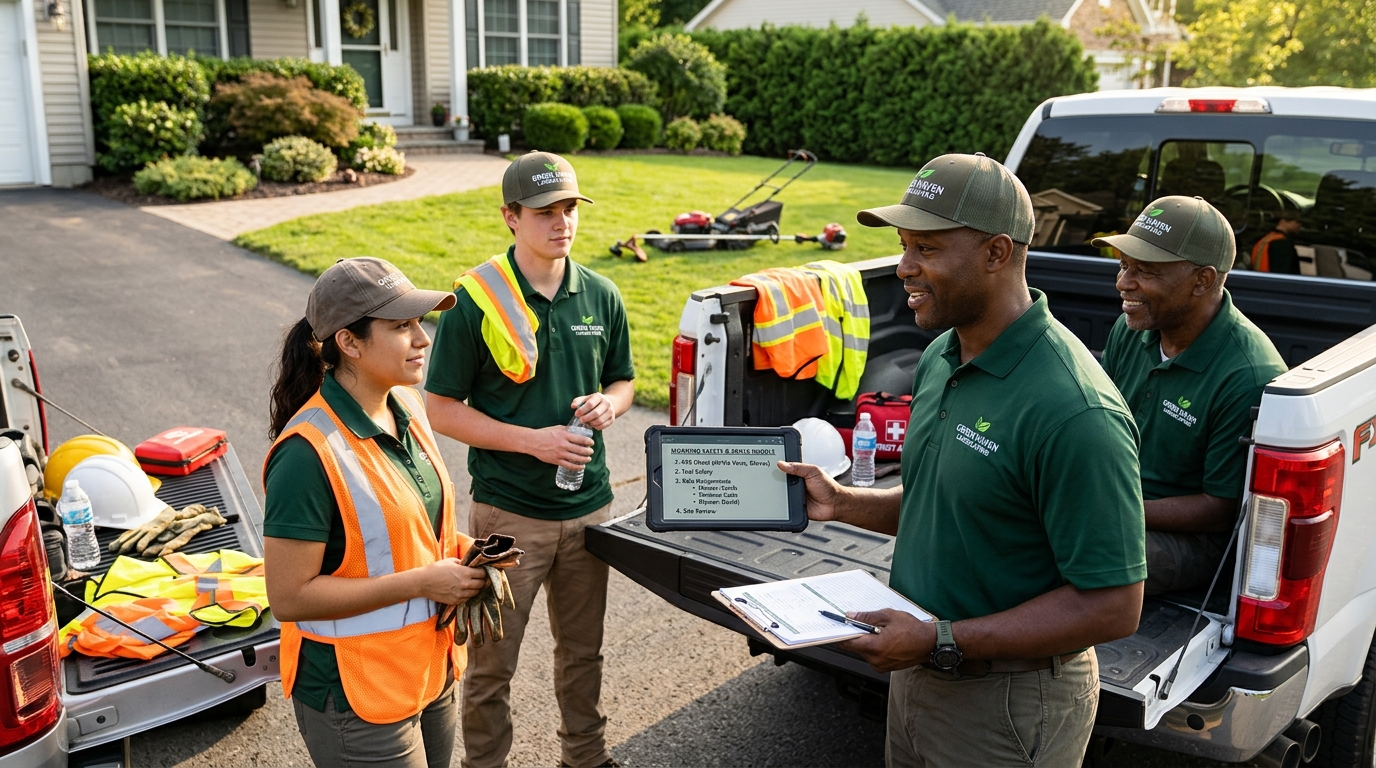
Talent is the bottleneck because demand keeps rising while supply tightens. The U.S. Chamber of Commerce Worker Shortage Index shows many states sit below 0.90 available workers per open job, and NALP confirms 70% of green-industry firms cannot fill roles fast enough to protect route density.
How does a labor gap translate into lost revenue?
Every unfilled crew slot leaves routes short-handed. The 2024 State of the Landscape Labor Market report found 76% of firms have at least one open position and 18% have six or more. When three-person crews run as twos, stop counts drop, overtime spikes, and margin evaporates. Understaffing is the fastest way to turn healthy demand into write-offs.
The compounding effect is worse than most owners realize. A missed maintenance visit leads to a callback, the callback costs a labor hour, and the labor hour displaces a paying job. Multiply that across a 12-week peak season, and a single unfilled crew role can quietly cost a mid-size operator six figures in lost billable revenue and customer churn.
Why does weak retention cap growth?
Growth requires stable crews that can teach new hires. When 25% of lawn-care firms retain fewer than 69% of their people, the survivors spend their days onboarding rather than scaling. Training costs stack, quality dips, and callbacks climb. Retention is the hidden throttle on revenue per truck.
How Big Is the Green-Industry Labor Shortage in 2026?
The 2026 shortage is structural, not cyclical. BLS expects 4% employment growth for grounds maintenance workers through 2034, while NALP’s 2026 Talent Trends shows companies shifting to year-round recruiting because H-2B scarcity and domestic worker gaps coexist every single season.
What do wages and turnover look like right now?
BLS May 2024 OES data lists a median wage of $15.71 per hour or $33,380 annually for landscaping and groundskeeping workers, with supervisors earning materially more. Labor costs are projected to rise about 20% through 2029 per Lawn & Landscape. The Jobber Home Service Economic Report shows green-sector firms raising pay and prices in tandem to keep crews intact.
How does the H-2B program factor in?
The statutory H-2B cap remains 66,000 per year split equally between halves. For FY 2026, DHS and DOL added 64,716 supplemental visas across three allocations. USCIS reached the second-half statutory cap on March 10, 2026, and the first supplemental returning-worker allocation of 18,490 hit its limit by early February.
That puts the effective ceiling near 131,000 H-2B workers for the year, yet landscaping competes with hospitality, seafood, and amusement for the same pool. Landscaping firms have historically been the single largest H-2B user group, and even a record supplemental release leaves many operators short. Planning six to nine months ahead is now the baseline, not a best practice.
What Does an Effective Landscaping Recruiting Funnel Look Like?
An effective funnel treats recruiting like lead generation: always-on, multichannel, and measured. LinkedIn Talent Solutions shows companies with strong employer brands cut cost-per-hire by up to 50% and lower turnover by 28%. The best landscaping operators run a recruiting machine that never goes dormant between seasons.
Top of funnel: where applicants discover you
Feed the top of the funnel through Indeed, ZipRecruiter, Facebook Jobs, and targeted Google Ads, then reinforce with local SEO that ranks your careers page for “landscaping jobs near me.” Add community events, trade-school partnerships, and employee referral bonuses. Multichannel sourcing reduces dependency on any single board when costs spike.
Middle of funnel: converting views into applications
A careers-ready website design with transparent pay ranges, benefit details, and two-minute mobile applications converts far better than generic “Apply Now” links. Indeed Hiring Lab research shows listings with explicit incentives attract meaningfully more applicants, especially in seasonal trades.
Bottom of funnel: interviews to offer
Speed wins. Replying within 24 hours, running a working interview on a real route, and issuing offers the same day beats drawn-out processes. Track applicant-to-hire ratio, time-to-fill, and source-of-hire in a simple dashboard. Treat every applicant the way you would treat a commercial estimate: answer fast, follow up, and close.
Structured interviews matter, especially for seasonal hires. Use a consistent scorecard across safety awareness, physical readiness, customer-facing communication, and team fit. Document decisions so rejected candidates hear a clear “why” and can reapply later. A transparent, respectful process creates alumni who refer friends even when they do not land the job themselves.
How Can Landscaping Companies Build an Employer Brand That Attracts Talent?
Employer brand is the reason qualified candidates pick you over the company down the street. LinkedIn data shows strong employer brands earn 50% lower cost-per-hire and 28% lower turnover, while weak brands effectively double recruiting spend. In a market where 70% of firms cannot fill roles, brand is a competitive moat.
Tell the real crew story
Short videos of veteran crew leaders explaining why they stayed for a decade convert far better than stock photos. Feature tenure milestones, certifications earned, and promotions from laborer to foreman. Authentic social proof counters the outdated assumption that landscaping is a stopgap job and positions your company as a career.
Align marketing and recruiting under one voice
Your customer marketing and careers marketing should feel like the same company. Bundle them under your landscape marketing services plan so branded photography, video, and social content serve both audiences. Homeowners who admire your crew also refer their neighbors and their kids to apply.
Google reviews also double as employer brand signals. Candidates research potential employers the same way customers research contractors. A 4.8-star profile with customer reviews praising crew professionalism quietly converts job seekers before they even click “Apply.” Ask crew leaders to reply publicly to positive reviews so candidates see the humans behind the brand.
What Training and Career Paths Keep Landscapers From Leaving?
Training is retention. McKinsey frontline workforce research found that career development is now the number-one reason frontline workers leave, and firms that invest in skills see participants up to four times more likely to stay. Yet only 21% of lawn-care companies document a career ladder, per the 2024 State of the Landscape Labor Market report.
Build a visible career ladder
Laborer, crew member, lead, foreman, account manager, branch manager. Each rung needs a pay band, required certifications, and a timeline. When new hires see the path on day one, they stop viewing the role as temporary. This is the single cheapest retention lever a landscaping company can pull.
Use certifications and apprenticeships
NALP’s Landscape Industry Certified programs, state pesticide licenses, and the NALP Landscape Management Apprenticeship give employees portable credentials tied to pay bumps. Companies that pay for training, then reward it with raises, anchor top performers. A great framework lives in this post on how landscaping companies can build the right team for long-term success.
Measure training ROI, not just hours
McKinsey research indicates talent-development investments typically return 3x to 5x within one to two years, driven largely by retention and productivity lift. Track certifications earned, retention for certified employees versus peers, and callbacks per crew before and after training. When the numbers show a hard financial return, training budgets stop being optional and become a standing line item.
How Do Pay, Benefits, and H-2B Strategy Work Together for Stability?
Pay, benefits, and H-2B planning are one integrated system. Jobber’s 2025 report shows green-sector firms raising wages and prices together to stay staffed, while USCIS hit the FY 2026 second-half cap on March 10, 2026. Owners who plan both domestic and H-2B strategy together start every spring fully staffed.
Set pay ranges that beat the BLS median
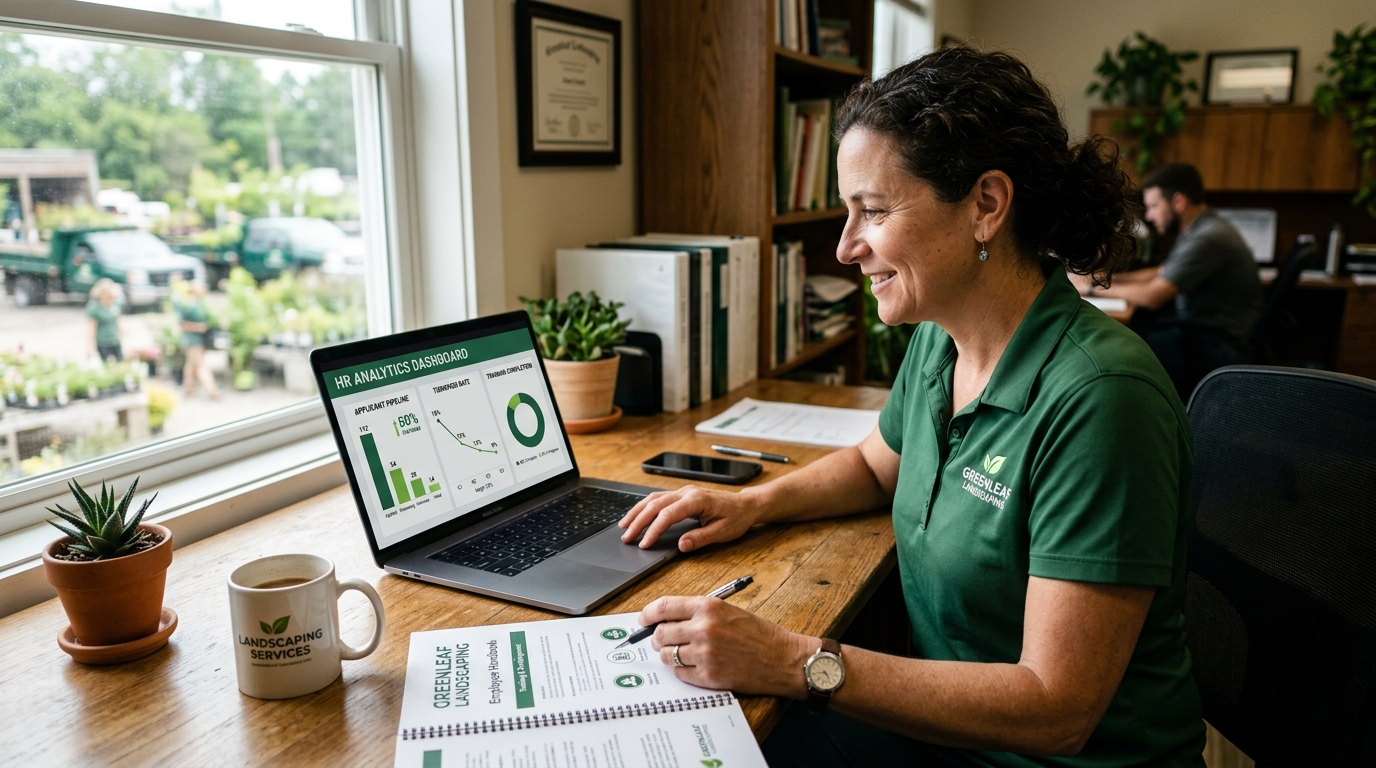
The BLS May 2024 median of $15.71 per hour is the floor, not the target. Add shift differentials for early starts, bilingual bonuses, and performance incentives tied to callbacks and stops per day. Publish the range on your careers page. Pay transparency is now a default candidate expectation, especially under 30.
Layer benefits that are hard to copy
Paid time off, health contributions, a Simple IRA match, a four-day summer schedule, and tool and boot allowances turn a job into a career. The 2024 NALP Compensation and Benefits Report confirms benefits adoption is accelerating across members. Pick two benefits competitors in your market do not offer and promote them aggressively.
Treat H-2B as a planned channel, not a backstop
Begin the certification process with DOL months early, use the three-allocation supplemental windows strategically, and build housing and transportation ahead of arrival. The FY 2026 release of 64,716 supplemental visas is significant, but demand exceeds supply. Pair H-2B with an equally funded domestic pipeline to avoid single-channel risk.
Which Retention Tactics Cut Turnover in Landscaping?
Retention compounds. Gallup’s State of the Global Workplace research links engaged teams to 17% higher productivity and 23% higher profitability, and SHRM estimates replacement costs at 1.5x to 2x salary. A landscaping company that lifts retention by ten points usually sees profit jump disproportionately the following season.
Great first 90 days
Most landscaping turnover happens in the first 90 days. Structured onboarding, a named mentor, safety training checkpoints at day 7, 30, and 60, and a 90-day review with a pay bump tied to skill milestones dramatically reduce early attrition. Practical daily habits from this guide to practical everyday leadership make onboarding feel human.
Invest in crew leaders
Gallup’s 2025 workplace data shows the largest year-over-year drop was among managers, falling five points. Crew leaders are the employee experience in the field. Train them on coaching, feedback, and scheduling. Leadership development, including proven female-led leadership strategies, broadens the bench and raises crew retention.
Build systems that outlive any one hire
Standard operating procedures, route sheets, and job costing templates reduce the chaos that drives good people out. The framework in landscaping business systems gives owners a playbook for documenting the work so new hires ramp faster and veterans are not stuck firefighting.
What Metrics Should You Track to Cultivate Talent Strategically?
You cannot cultivate what you do not measure. Operators copying the Deloitte workforce playbook track a small set of leading indicators weekly. The goal is a one-page talent dashboard with numbers every owner, manager, and foreman can see, review, and act on inside fifteen minutes.
Recruiting KPIs
- Applications per week by source (Indeed, referrals, careers page, Facebook)
- Time-to-fill by role
- Offer acceptance rate
- Cost-per-hire, benchmarked against the SHRM $4,700 to $5,475 range
Retention and development KPIs
- 90-day retention rate
- Annual turnover percentage, with a goal above the NALP 69% retention benchmark
- Training completion percentage
- Promotion rate from within
- Engagement pulse score aligned to Gallup benchmarks
How Do You Connect Talent Strategy to Marketing and Growth?
Talent and marketing share the same pipeline mindset. Jobber and Indeed Hiring Lab show that home-service firms winning on growth are also winning on hiring. The same SEO, paid media, and content that generate commercial quotes should also feed your careers pipeline on the same monthly budget.
One plan, two audiences
Your quarterly marketing calendar should include customer-facing case studies and employee-facing career stories side by side. Repurpose before-and-after project reels into day-in-the-life recruiting content. A single field videographer often pays for themselves in reduced cost-per-hire alone within one season.
Turn crew quality into a sales story
Commercial property managers and HOAs increasingly ask who will be on site. Certifications, tenure, uniforms, and safety culture become deal closers. When your talent strategy is visible in proposals, win rates on premium commercial work rise measurably. Talent becomes the pitch.
Reinvest talent savings into growth
Every percentage point of turnover you eliminate frees cash you can redeploy into sales, software, and route density. A company that cuts annual turnover from 45% to 30% on a 40-person crew easily recovers six figures in replacement costs alone. That capital funds the next branch, the next truck, and the marketing campaign that feeds both customer and careers pipelines simultaneously.
Ready to Turn Talent Strategy Into Sustainable Landscaping Growth?
A strong landscaping talent strategy pays off in lower cost-per-hire, higher retention, and stronger margins on every truck. If you want marketing, careers pages, and recruiting content working as one system, our team can help you build it. Explore our landscape marketing services or contact Sideways8 to map your next season of hiring and growth.
